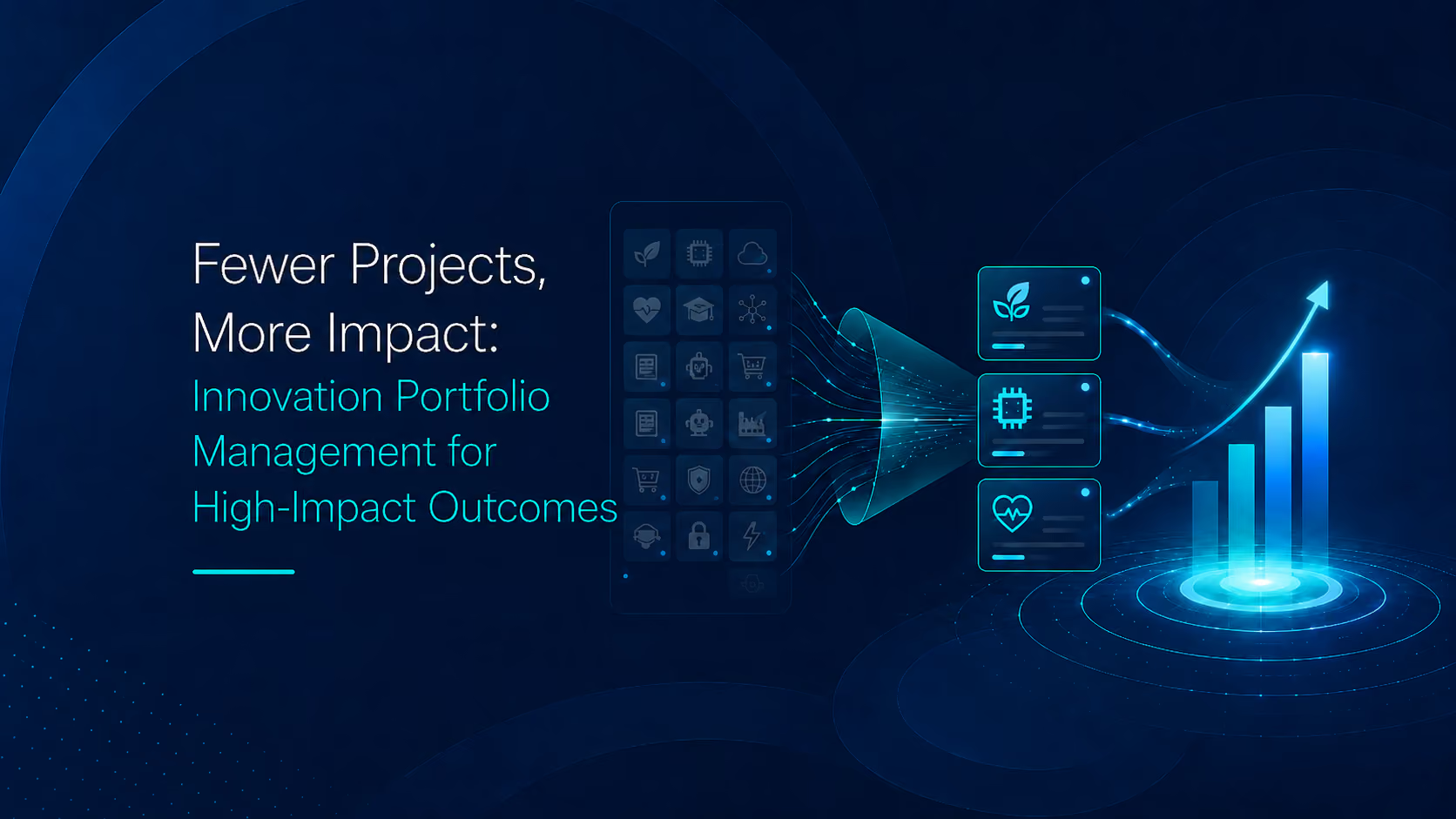
Top-Down instead of Bottom-Up: Finally connecting strategy and execution
Why perspective matters and how bottom-up systems hinder strategic decisions.

Monday morning, 9 AM in the boardroom. The CFO poses a seemingly simple question: "Should we invest more in our AI project or the sustainability initiative? Which brings us greater strategic value?"
The strategy team's response: "Give us two weeks. We need to gather project data from three different systems first."
Two weeks. For a decision that should be made today. Welcome to the reality of bottom-up systems – where the gap between strategy and execution often seems unbridgeable.
The Bottom-Up problem: when strategy becomes a waiting game
Bottom-up starts at the project level. Project managers maintain their data, reports flow upwards, get aggregated – and arrive weeks later at the decision-makers.
This works for operational management. But not for strategic decisions.
Bottom-up is like looking through a telescope from the wrong end. You see every project detail, but the big picture remains blurred.
Consider a company with 80 strategic initiatives. Each project runs in its own tool, with its own status rhythm, its own KPIs. The CFO wants to know: "Which transformation initiatives are still delivering ROI?"
The bottom-up system responds: "Here are 200 pages of project reports."
The problem isn't the data volume. The problem is the perspective.
Bottom-up systems manage projects; they don't answer strategic questions. They deliver data, but no insights. They document what's running, but they don't help decide what should be running.
The Top-Down approach: strategy first, then Execution
Top-down flips the perspective: Strategy is the starting point, not the goal. Instead of aggregating upward, you start with the strategic question: "What do we want to achieve? Which initiatives contribute to this? How are they performing?"
The crucial difference
Bottom-up asks: "What's happening in our projects?"
Top-down asks: "What should we do?"
Bottom-up delivers: Reports and status updates.
Top-down delivers: Real-time decision support.
A real-world example
Back to our CFO. With a top-down approach, you see in real-time:
- Strategic alignment: Which project contributes more strongly to corporate objectives?
- Portfolio performance: How do initiatives compare?
- Resource impact: What happens if we reallocate?
Result: The decision doesn't take two weeks. It happens now. Data-driven. Transparent.
Why Top-Down is critical today
Markets change faster. Technologies revolutionize industries overnight. Transformation is no longer a project; it's a permanent state.
The speed of strategic decision-making becomes a competitive advantage. And speed comes from the right perspective.
The three critical advantages
- Real-time transparency: The C-level sees at any moment where the company stands strategically: from overall strategy down to individual projects. The question "Are we on track?" is no longer a weekly question – it's a click away.
- Faster decisions: Concrete example: Portfolio review time reduced from six weeks to one day. This isn't an efficiency gain. This is a strategic game changer.
- Strategic alignment: Bottom-up often produces well-managed projects that are strategically irrelevant. Top-down ensures every initiative has a clear "why" that aligns with corporate objectives.
Connecting Strategy and Execution: The integrated solution
Many companies use project management tools – valid for their purpose. But the question isn't whether project managers work well. The question is whether the C-level can make the right decisions: quickly, data-driven, transparently.
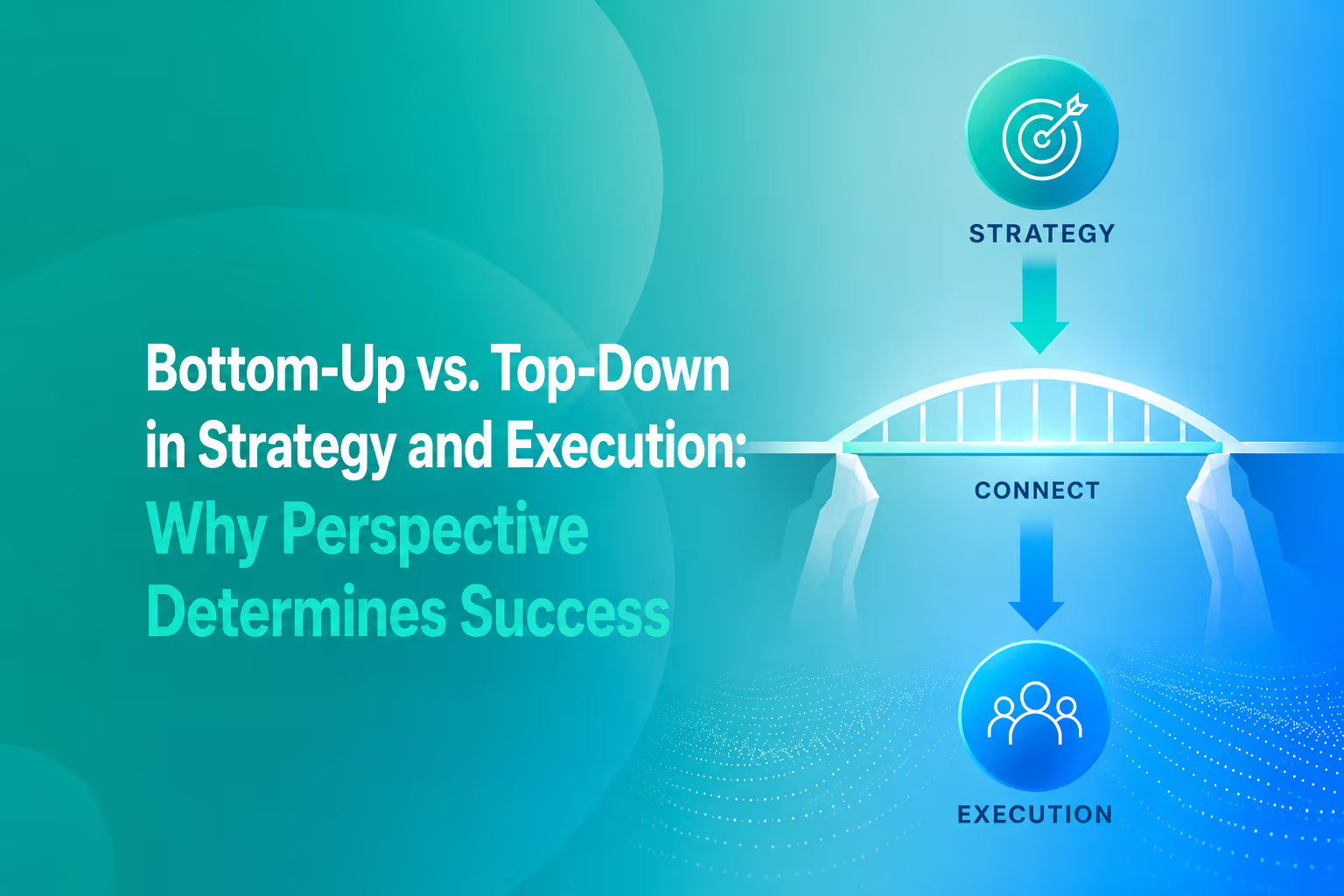
This requires a platform that thinks from top to bottom: Strategy → Initiatives → Projects → Results.
Business Strategy & Execution and Innovation Strategy & R&D Management must be connected. Project managers work in familiar workflows. Above this lies a strategic layer that answers the questions that matter to the C-level.
The result:
- Faster response time to strategic changes
- Smaller gap between strategy and execution
- Less time wasted on manual reports.
Perspective makes all the difference
Back to the CFO in the boardroom. With Bottom-Up: a two-week odyssey through data and PowerPoints. With Top-Down: an informed decision – now.
This is the difference between reactive and strategic management: Between reports and insights. Between Bottom-Up and Top-Down.
The question is: How do you connect strategy and execution in your organization?