From strategy to innovation and results
Interview with Volker Staack, Managing Director of Evolutionizer GmbH

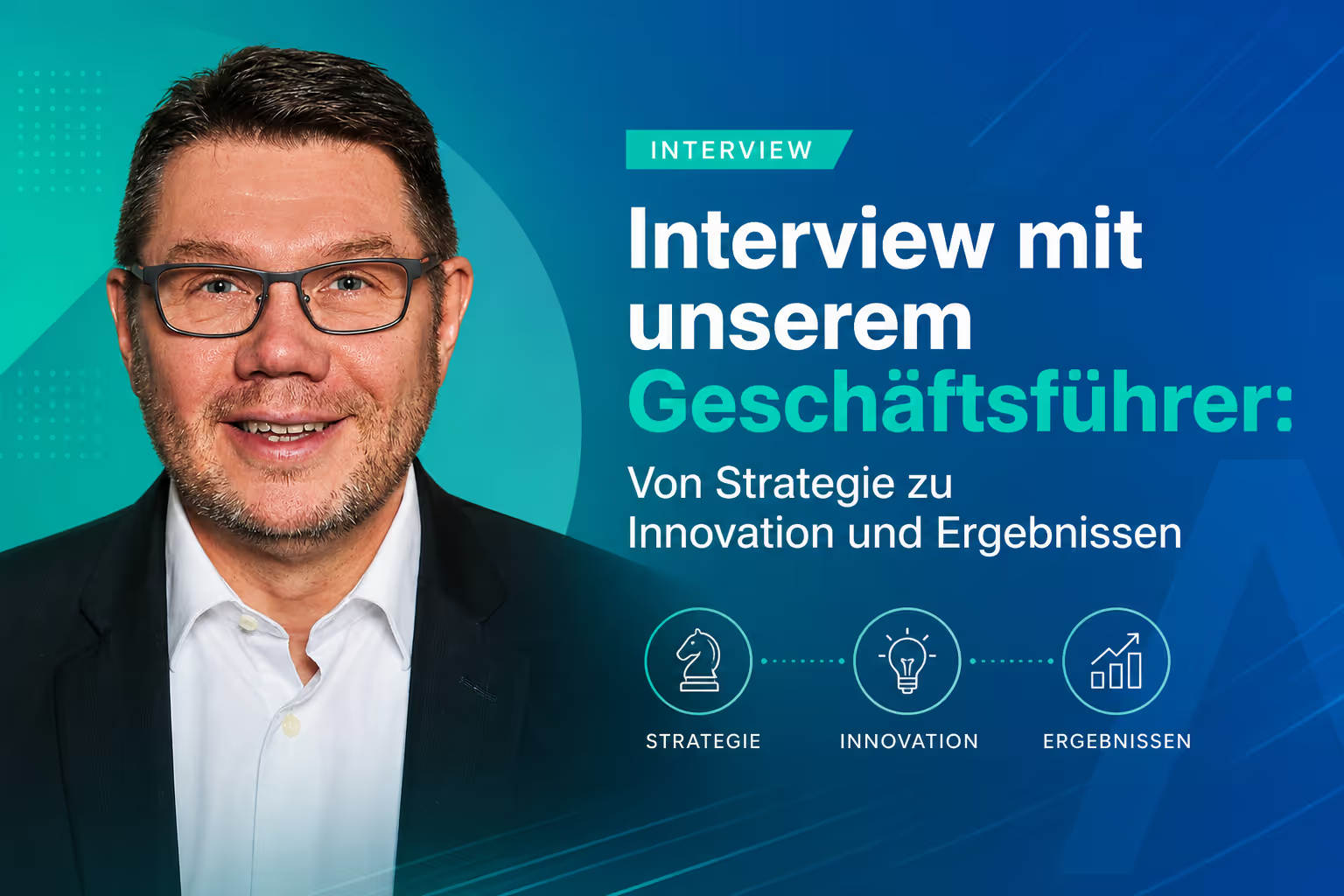
Many companies struggle to translate ambitious strategies and innovations into concrete results. We spoke with our Managing Director Volker Staack about this challenge.
In many companies, we see a gap between strategy and implementation. Where do you experience this gap most frequently in practice?
Volker: The gap primarily manifests in strategies being formulated in detail, with specific initiatives and responsibilities, but then not being implemented consistently. The problem is threefold:
First, ongoing activities are not mapped to strategic initiatives. Second, the connection to concrete business objectives is missing. And third, day-to-day operational issues override strategic priorities.
Many companies invest heavily in innovation. Yet often there's little measurable impact. What's the reason for this in your experience?
Volker: Innovation success is not measured by investment. The innovation rate doesn't automatically correlate with a company's degree of innovation. First, a genuine innovation strategy is often missing. It irequires not just budget, but clarity about the “big bets”. Where are the major opportunities? Second, there's a lack of governance: processes for the creating, evaluation and implementation of innovation opportunities. Third, innovation and strategy are frequently treated separately. Successful innovation emerges when you derive opportunities directly from corporate strategy, from observing markets, competitors, trends and technologies.
When good strategies or innovations fail, what are the most common implementation failures?
Volker: Innovations are long-term oriented, but day-to-day priorities constantly override them. Add to this organizational resistance. Even after a decision is made, opposition emerges from within the organization.
To guide innovations through the organization requires a triad of champions:
- The process champion understands the resistances.
- The technical champion brings in technical expertise.
- The power champion makes decisions when things get difficult.
The biggest problem is the missing thread. In long-term projects, there is no continous connection from initial thoughts through the approval process to implementation.
There must be full transparency from innovationcreation through decision-making to implementation. When everyone understands why aninnovation is important, the chances of success increase dramatically.
What do successful companies do differently when it comes to connecting strategy, innovation and implementation?
Volker: Successful companies consistently link business strategy and innovation strategy. They don't think in terms of R&D silos but develop hand-in-hand with corporate strategy.
There are different types. Tech Drivers like Google, develop in reserve. Market Readers like Samsung observe the market intensively and then react very quickly. And then there are the Need Seekers. These are the particulary successful ones. They engage early with future application possibilities and satisfy needs that aren't yet articulated today.
Truly successful innovation always requires the interplay of four elements:
- An innovation strategy derived from search fields and closely linked to the business strategy.
- Portfolio management that manages all initiatives, from incremental to radical innovations using best practice methods.
- A governance and organizational model with clear decision-making rights.
- And integrated roadmaps: Product, technology and customer-need roadmaps must be connected.
Beyond this, there are five additional critical success factors:
- Alignment: i.e. clear coordination between innovation and business strategy.
- An innovation culture that is supported by the entire corporate culture.
- Leadership, and this is important: the entire top management must be committed, not just R&D.
- Customer insights, direct feedback from end users.
- Agile methods: work agile in the early phase, later in the stage-gate process.
Digital platforms are crucial here. They must map the end-to-end process and serve as a single point of truth. Important are clear roles and rights, analysis and decision support, as well as KPI-based dashboards.
A platform like our EVO-Cloud brings exactly these elements together: governance, portfolio management, approval, reporting and end-to-end workflow – all in one system.